
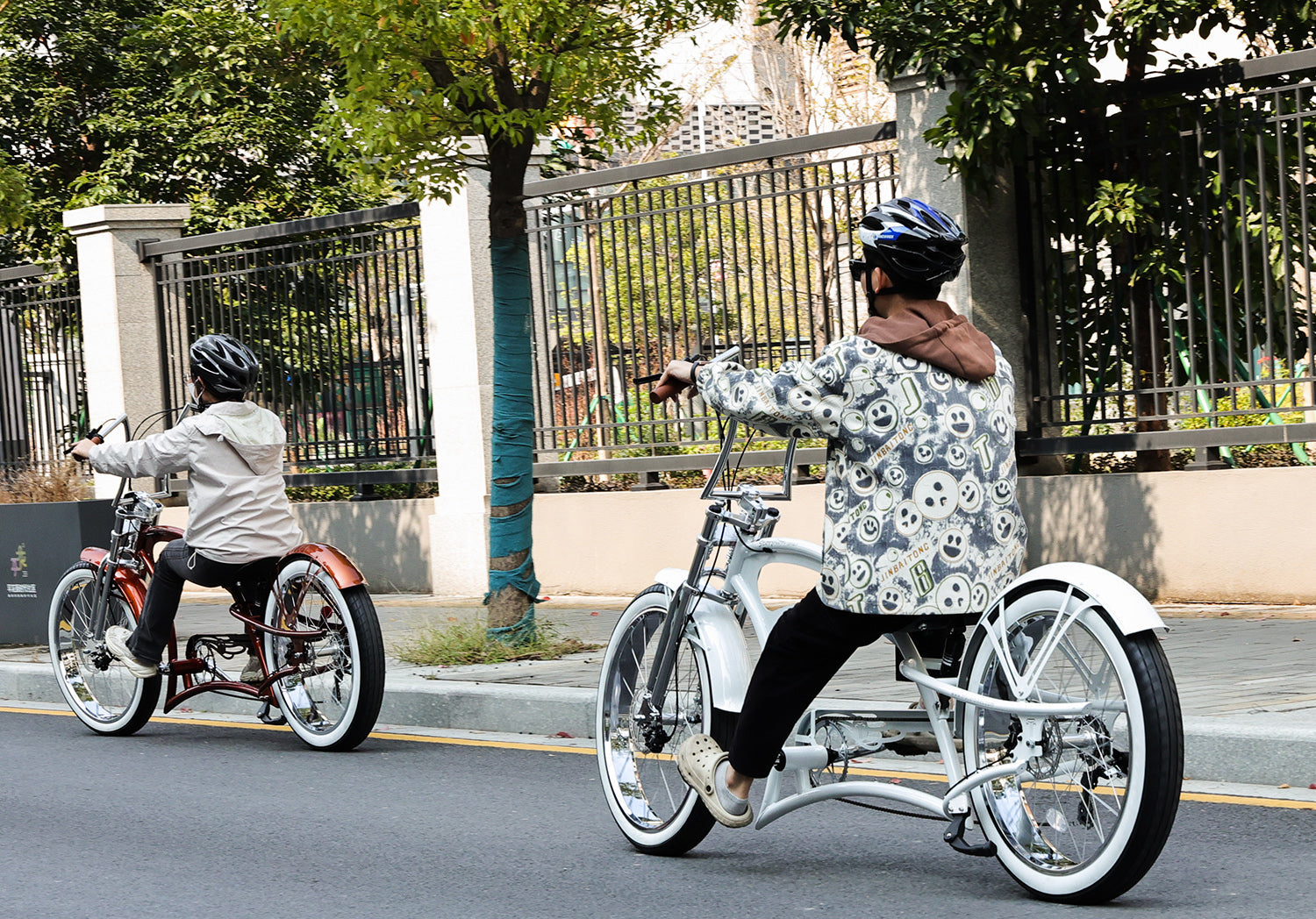
Cycling is a fun, sustainable way to stay active. Whether you’re cruising city streets, riding the beach, or relaxing on a cruiser bike, it does more than just get you outside. Many riders wonder which body parts cycling actually tones.
The answer: more than you think. Cycling mainly works the lower body, engages the core, and supports overall fitness. From classic bikes to stretch cruiser bikes and eBikes, it’s a low-impact, full-body workout that’s easy to stick with long term.
This guide explains which muscles cycling tones, how different bike types affect muscle engagement, and how to maximize results—without turning riding into a chore.
Why Cycling Is More Than Just Cardio
Many people think of cycling as “just cardio.” While it’s true that cycling is an excellent aerobic exercise, that label doesn’t tell the full story.
Cycling involves:
- Repetitive resistance against pedals
- Sustained muscle engagement over time
- Core stabilization and posture control
- Balance and coordination
Unlike short bursts of high-impact exercise, cycling allows you to work muscles continuously, which is ideal for toning rather than bulking. That’s why cyclists often develop lean, defined legs and improved overall body composition.
Whether you ride a standard bike, a cruiser bike designed for comfort, or a pedal-assist electric bike, the muscle benefits come from consistent movement and resistance, not extreme strain.
How Muscle Toning Works When You Cycle
Before diving into specific muscle groups, it’s important to understand how cycling tones the body.
Muscle toning happens when:
- Muscles are repeatedly activated
- Fat percentage gradually decreases
- Muscle fibers adapt and become more efficient
Cycling doesn’t usually create large muscle mass like heavy weightlifting. Instead, it:
- Builds lean muscle
- Improves muscle endurance
- Enhances definition over time
Because cycling is easy to repeat day after day, it’s especially effective for people who value consistency over intensity—a key factor in long-term fitness success.
Lower Body Muscles Toned by Cycling (Primary Focus)
The lower body does the majority of the work in cycling. Every pedal stroke engages multiple muscle groups, making cycling one of the best activities for leg toning.
Quadriceps (Front Thighs)
The quadriceps are the most active muscles during cycling. They:
- Extend the knee during the downward pedal stroke
- Provide the main driving force
You’ll feel your quads working most when:
- Riding uphill
- Increasing resistance
- Accelerating from a stop
On bikes with comfortable geometry, like cruiser bikes, quad engagement remains strong without excessive strain, making longer rides more sustainable.
Hamstrings (Back Thighs)
Hamstrings work alongside the quads to:
- Pull the pedal upward
- Stabilize the knee joint
Although they’re less dominant than the quads, hamstrings play a crucial role in balanced leg development. Over time, regular cycling helps create a smoother, more defined thigh profile rather than uneven muscle growth.
Glutes (Butt Muscles)
Cycling is surprisingly effective at toning the glutes.
The glute muscles:
- Assist with hip extension
- Provide power, especially during climbs and starts
- Stabilize the pelvis
Upright riding styles—common on cruiser bikes and stretch cruiser bikes—encourage better glute engagement compared to aggressive, leaned-forward positions. This makes relaxed bikes particularly appealing for riders focused on comfort and lower-body toning.
Calves (Lower Legs)
While calves aren’t the main power source, they:
- Stabilize the ankle
- Assist with pedal control
- Support smooth motion
Longer rides and steady cadence help build endurance and subtle definition in the calves without making them bulky.
Boost Your Mental Health
Cycling isn’t just physical. Regular rides reduce stress, improve mood, and enhance mental clarity. The rhythm of pedaling and being outdoors creates a meditative effect, making cycling easier to stick with. A clear mind helps you stay consistent—and consistency is key for muscle toning and fitness results. Related reading: The Impact of Cycling on Mental Health
Core Muscles Strengthened While Cycling
Cycling may not look like a core workout, but your core is working constantly behind the scenes.
Abdominals
Your abdominal muscles:
- Keep you balanced on the bike
- Stabilize your upper body
- Help maintain efficient posture
Riders who maintain good posture—especially on cruiser bikes with upright handlebars—engage their core naturally throughout the ride.
Over time, this can lead to:
- Improved abdominal tone
- Better posture
- Reduced lower-back strain
Lower Back
The lower back supports:
- Spinal alignment
- Upper-body stability
Well-designed bikes with ergonomic frames and relaxed geometry help reduce strain while still strengthening the lower back muscles through gentle, sustained engagement.
This makes cycling an excellent option for people who want core strength without intense floor exercises.
Upper Body Muscles Used in Cycling
Cycling is not an upper-body-dominant exercise, but that doesn’t mean the upper body is inactive.
Arms (Biceps and Triceps)
Your arms:
- Control steering
- Absorb vibration
- Help with balance
Stretch cruiser bikes, in particular, often feature wider handlebars and a longer reach, which increases arm engagement compared to compact bike designs.
Shoulders and Chest
The shoulders and chest:
- Support posture
- Maintain handlebar control
Upright bikes place less strain on the shoulders while still promoting muscular endurance. Over time, this can improve shoulder stability and reduce tension from daily activities like desk work.
Maximize Muscle Toning While Riding
Different riding styles and bike types affect muscle engagement. Short, intense rides boost leg strength, while longer steady rides improve endurance. Uphill rides, added resistance, or longer distances enhance toning on quads, hamstrings, glutes, and calves—whether on a standard bike, stretch cruiser bike, or pedal-assist eBike. Related reading: Biking for Fitness: Creating an Effective Workout Plan
Does Cycling Tone the Whole Body?
Cycling is primarily a lower-body-focused workout, but it supports whole-body fitness.
Compared to other activities:
- It tones legs more than walking
- It’s gentler than running
- It’s easier to sustain than many gym routines
For riders who want full-body toning, cycling works best when combined with:
- Occasional strength training
- Core exercises
- Active daily movement
That said, cycling alone can significantly reshape the lower body and improve overall muscle definition.
How Different Bike Types Affect Muscle Toning
Not all bikes engage muscles the same way. The type of bike you ride can subtly change how your body works.
Cruiser Bikes
Cruiser bikes are designed for comfort and relaxed riding.
Benefits for muscle toning:
- Upright posture supports core engagement
- Comfortable geometry encourages longer rides
- Reduced strain increases consistency
Cruiser bikes are ideal for:
- Beginners
- Casual fitness riders
- Riders prioritizing comfort and sustainability
Stretch Cruiser Bikes
Stretch cruiser bikes feature:
- Longer frames
- Wider handlebars
- Relaxed but powerful riding positions
These bikes:
- Increase core and arm involvement
- Encourage glute engagement
- Create a unique balance between comfort and control
They’re popular among riders who want a stylish bike that still provides noticeable fitness benefits.
eBikes (Electric Bikes)
A common myth is that eBikes don’t tone muscles. In reality, pedal-assist eBikes still require active pedaling.
eBikes help by:
- Allowing longer rides
- Reducing fatigue barriers
- Encouraging more frequent cycling
Studies show many eBike riders ride more often and farther than traditional cyclists. That increased consistency leads to real muscle engagement and toning over time.
For many people, an electric bike is the most realistic way to maintain an active lifestyle.
Bike Fit Matters
Proper bike fit ensures efficient muscle use and reduces strain. Correct seat height, handlebar reach, and frame size engage legs, core, and upper body naturally. Comfortable bikes—classic cruiser bikes, stretch cruisers, or eBikes—make riding sustainable, turning everyday trips into effective workouts. Related reading: How to Choose the Perfect Bike for Your Riding Style
How Often Should You Cycle to See Toning Results?
Consistency matters more than intensity.
General guidelines:
- 3–5 rides per week
- 30–60 minutes per ride
- Mix easy and moderate efforts
Typical timelines:
- 2–4 weeks: Improved endurance and leg firmness
- 4–8 weeks: Noticeable muscle tone in thighs and calves
- 8–12 weeks: Visible changes in lower-body shape
Results vary based on diet, intensity, and starting fitness level—but regular cycling almost always leads to improvement.
Tips to Maximize Muscle Toning While Cycling
To get the most out of your rides:
- Adjust saddle height for full leg extension
- Add gentle hills or resistance
- Maintain steady cadence
- Focus on posture
- Ride longer, not harder
Even small improvements in bike fit or riding habits can significantly improve muscle engagement.
Common Myths About Cycling and Muscle Tone
“Cycling makes legs bulky.”
In reality, cycling builds lean muscle, not bulk.
“eBikes don’t count as exercise.”
Pedal-assist still engages muscles and increases activity levels.
“You need high speed to tone.”
Duration and consistency matter more than speed.
Who Should Choose Cycling for Muscle Toning?
Cycling is ideal for:
- Beginners
- Older adults
- People with joint concerns
- Lifestyle-focused riders
- Anyone who wants sustainable fitness
From relaxed cruiser bike rides to longer eBike adventures, cycling adapts to your needs rather than forcing your body to adapt to extreme workouts.
🚴 Exclusive Blog Offer
Unlock 10% OFF your order with our exclusive blog discount!
Use code BG10OFF at checkout to save on your favorite Chicobikes.
Promo Code: BG10OFF
Ride more. Save more.
Conclusion
Cycling tones far more than just your legs. It strengthens the quadriceps, hamstrings, glutes, calves, core, and even supports upper-body endurance—all while being low-impact and enjoyable.
Whether you ride a classic bike, a comfortable cruiser bike, a stylish stretch cruiser bike, or a pedal-assist electric bike, cycling offers a realistic path to better muscle tone and overall fitness.
The most effective workout isn’t the hardest one—it’s the one you’ll enjoy and repeat. And for millions of riders, that workout is cycling.
Share:
The Ultimate Guide to Fat Tire Ebike Safety: Best Tips for Winter Roads & Holiday Rides
Why Cruiser Bikes Still Matter in 2026: 5 Everyday Ways People Ride